

gbNYC Book Club: David Owen's "Green Metropolis" Singles Out NYC as Standard-Setter

2009
4
Nov
Green Metropolis New York City Green Buildings NYC

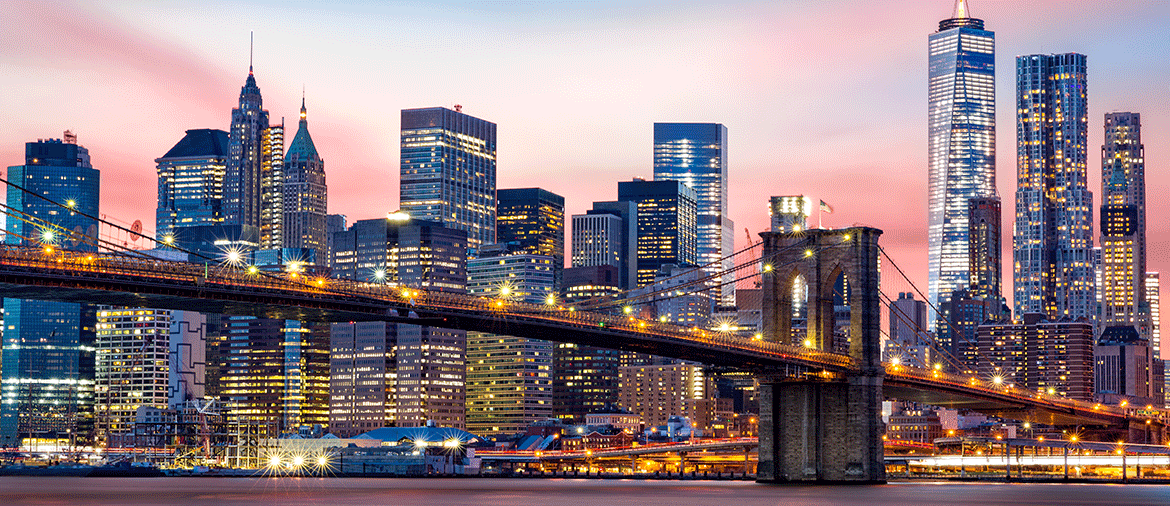
Plenty of New Yorkers found reasons to vote against Michael Bloomberg yesterday, although roughly five percent more found a reason to vote for him, and he was elected for his third term as Mayor. (You may have heard as much if you use sites other than gbNYC for your local politics news, which you probably should) Whether they made that decision despite or because of the Bloomberg campaign's $85 million mini-stimulus to the negative-advertising and direct-mail industries is a decision each voter made for him- or herself, but one achievement on which Bloomberg can easily hang his (very expensive) hat is the impressive greening of New York City. I'm not always the hugest fan of Bloomie -- Stephen likes him more than I do, I think -- but His Orange, Philanthropically Inclined Honor has delivered to an impressive degree on his goal of making New York City a surpassingly green city for its size. "Green Metropolis," a (relatively) new book by The New Yorker's David Owen, argues that Bloomberg's New York is not just one of the greenest cities in the United States, but in the entire world.

Of course, this isn't exactly news to New Yorkers who care about this sort of thing -- the news that New Yorkers' per capita carbon footprint is less than a third of the 24.5-metric-ton American national average has long been a point of pride for those of us who bother being proud of that sort of thing. Owen's greater point -- as summarized in Margaret Mittelbach's review of "Green Metropolis" in the San Francisco Chronicle -- is that the secret of New York's efficiency lies less in New Yorkers than in New York itself. "The lesson to be learned from New York City, [Owen] says, is not that New Yorkers are particularly environmentally aware, compared with anyone else," Mittelbach writes. "It's that their population-dense living situation makes it easier and cheaper to use less energy."

Or, as Owen himself put it in The New Yorker five years ago (gbNYC is breaking news!), "To borrow a term from the jargon of computer systems, dense cities are scalable, while sprawling suburbs are not. The environmental challenge we face, at the current stage of our assault on the world's non-renewable resources, is not how to make our teeming cities more like the pristine countryside. The true challenge is how to make other settled places more like Manhattan." Owen updated that piece recently on his website, and also made this point in greater detail, and more recently, at Yale's Environment 360 website.

In the Yale piece, Owen makes the point that while New York's efficiency is easy to disparage as "unconscious" -- that is, we don't really have much choice but to live in smallish apartments, get to work on the subway, etc. -- it's that very inevitability that made New York comparatively efficient on a per-capita basis even before programs such as Bloomberg's PlaNYC 2030 made the quest for a greener, more sustainable city something that people actually thought about. This is kind of a new thing for gbNYC, but I'm going to buy "Green Metropolis" and give it a read, and hope you'll do the same -- I'll post my thoughts on it once I read it. If you've already read it, I'd love to hear your thoughts in the comments. I trust there won't be any serious spoilers; this isn't "Mad Men," here, which means I imagine it won't get revealed that NYC is secretly cheating on Betty with the (pretty but honestly kind of boring) schoolteacher. If that happens in the book, please keep it to yourself.

Comments

Great going New York!

Great going New York! Surprising actually considering all the large number of conditioning units I witnessed last July and August roaring all night on the windows of apartments in Manhattan (and occupied by one or two persons)

David Owen's book

Hey David. At your suggestion I picked up this book and just recently finished it (it took me awhile because I was only reading it on the subway and I have a short commute). I don't necessarily agree with everything he says in the book, but I found it a very interesting read (although I thought some parts were a little repetitive and that he could have shortened it a bit). The main benefit of the book, in my opinion, is that he is not your traditional environmentalist and frequently points out that environmentalists often have it exactly backwards. Obviously his main idea is nontraditional--that large urban areas are inherently more environmentally sustainable than rural areas. But some of his other points are interesting as well--for example his idea that any environmental policy that depends on the goodwill of people to do it will never work and that the best environmental policies are those where people act not because it's environmentally beneficial but because there is no good alternative (such as mass transit in NYC). Anyway, thanks for letting me know about the book and if anyone is interested in chatting about it, count me in.

David's picture

Still Working On It

I'm maybe halfway through it, Cullen, so thanks for spoiling the ending. Come on!

Seriously, I am working on it, and enjoying it. There's a kind of relentless contrarian-ness to the tone that I don't always appreciate -- the everything-everyone-thinks-is-wrong angle is maybe my least favorite journalistic trend of the moment -- and thus far the book reads like a string of long New Yorker articles, but that's not necessarily a bad thing. In fact it's a very readable and entertaining thing, at least to this point. I'm going to do a gbnyc post on the book when I finally finish it, but I'm glad you bought and read and enjoyed it, and I look forward to talking more about it. I hope we can come up with a cool way to have a discussion on the site, but the comments section works well enough for me if we can't.

Cool. Yeah, I got a little

Cool. Yeah, I got a little tired of his relentless harping on every environmentalist out there, but it's sometimes nice to read someone who is not "rah rah" about every single environmental idea. You see this a lot on the green building sector--there is not a lot of critical thinking going on, or at least not as much as one hopes there would be. Stephen and I have talked about this. Anyway, sorry for spilling the beans (spoiler: the dog dies in the end) but when you finish it, let me know.

Post new comment

The content of this field is kept private and will not be shown publicly.
  • Web page addresses and e-mail addresses turn into links automatically.
  • Allowed HTML tags: <a> <p> <span> <div> <h1> <h2> <h3> <h4> <h5> <h6> <img> <map> <area> <hr> <br> <br /> <ul> <ol> <li> <dl> <dt> <dd> <table> <tr> <td> <em> <b> <u> <i> <strong> <font> <del> <ins> <sub> <sup> <quote> <blockquote> <pre> <address> <code> <cite> <embed> <object> <param> <strike> <caption>
  • Lines and paragraphs break automatically.
  • Insert Google Map macro.
  • Twitter-style @usersnames are linked to their Twitter account pages.
  • Twitter-style #hashtags are linked to search.twitter.com.

More information about formatting options

Recent Comments

  • Anonymous (not verified) says

    Good Work . But if the...

    more
  • morgan says

    I couldn't help not noticing that the amount of money this...

    more
  • evision (not verified) says

    ...

    more
  • steve rone (not verified) says

    Please email me information on investment oppotunities. Thanks...

    more
  • BenRippedOff (not verified) says

    It's good public relations for TD Bank to go Green & I'm...

    more
  • john s. carter (not verified) says

    I have been in construction for 41 years.I came up with an idea...

    more

Inside gbNYC